Cropped.jpg)
"Build a little, Test a little, Learn a lot"
Before you open CMO, having an idea of what you want to see, comes first. By this I mean, is this going to be a head to head surface battle, air to surface attack, cargo operation etc. Think of this in the most basic terms, you can always add and layer the scenario as it becomes necessary, and it will.
Just a side note, attempting to re-create a current or past event is not exactly a rookie project. I have fairly extensive knowledge of actual capabilities and limitations of pre and modern naval forces and the weapons they have at their disposal, and I can say with absolute certainty, there is a big difference in what happens in real life battles or actions and what you can achieve in CMO. (See this video: Syria 2018 Strike Part 2) Once you have built a few smaller skirmishes and a few battles , you will get a fair idea about what I call the X-Factor in CMO.
The X-Factor is the difference between actual radar ranges and CMO ranges, weapon flight paths and profiles and CMO weapon flight paths, weather effects and CMO weather effects. When you understand these difference, frustration levels decrease.
In summary, have an idea of what you want to do, make a few notes and stay focused on that idea.
Planning
If you purchased this simulator, you most likely have several sources of reliable information you get a lot of your information from. These sources are now your research material. If you want any semblance of realism, research is key.
We have a pretty fair repository of useful information and links for your research here.
Historical perspectives and writings are a big help as well.
Check out my reading list here.
Research is great and educational, but usually only means something to the type of people reading this. Most really wouldn't notice the little things, like the actual number of planes on a carrier or the squadron names. They just want to play shoot the bullets. Which is great for us...we need players for our scenarios. But sometimes it's just fun to play in the editor too.
In your research, you won't find much on actual tactical plans or ships movement for obvious security concerns. I recommend calling Adm. Koehler at 3rd Fleet in San Diego and ask him those questions.
For U.S. 3rd Fleet. Contact the quarterdeck at 619-221-5287 or mail to 53690 Tomahawk Dr STE 338 San Diego, CA 92147-5004
Oh and drop us a line and let us know how that worked out for you.
Matrix Forums and Comment sections of articles are another "source" of "information".
*Disclaimer: You may find sea lawyers , morons and asshats in these areas so take advice with a grain of salt and do some checking on what you find.
Having actual tactical knowledge about naval operations is both a godsend and a curse. The curse being, your ability to build a very accurate comprehensive operation, and not being able to share it with anyone. Such is life.
In a certain forum, highlighted above, read through the forum, and focus on the things a spy would want to know. Specific questions about tactics and operations. Isolate who is doing all the asking, read back a year or so and if you can identify the account that should be RED FLAGGED, let me know in the comments below and if it matches mine. I will buy the first match a 1 year Digital Membership to United States Naval Institute.
My point here is, those that have actual knowledge of classified information, are not going to share that with anyone, unless their name is Clinton. So don't hold your breath.
In summary, do your due diligence, especially if you plan to contribute your scenarios to the community. Find what you consider to be reliable sources and study what you find.
Notice: There will never be a single link posted on this site that originates from CNN, ABC, CBS, FOX or MSNBC
Research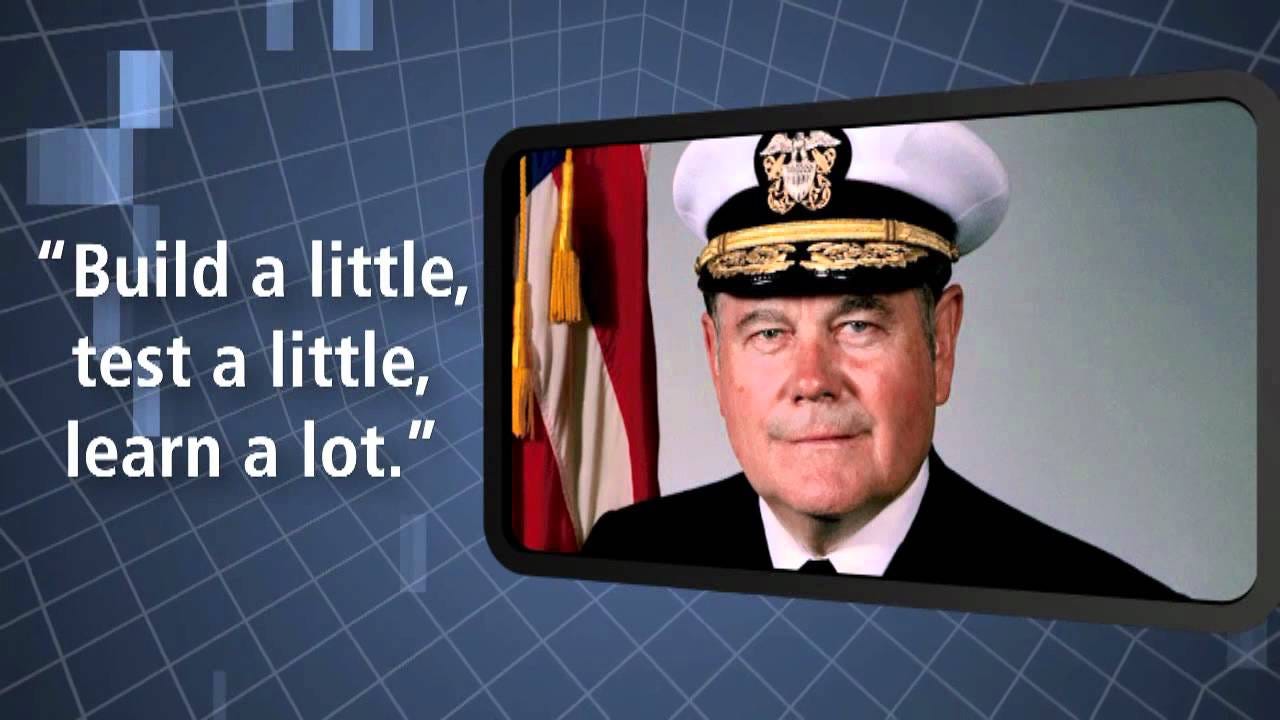
I was fortunate enough to serve under Admiral Wayne E. Meyer, The Father of Aegis, (pictured above) while I was stationed aboard USS Norton Sound, his influence is still with me today.
I'm not arrogant enough to think I'm the only one who's ever thought of this, but the classic military kill chain—Find, Fix, Track, Target, Engage, Assess (F2T2EA)—is usually taught and executed as a purely reactionary process. You spot the threat, and then scramble to respond.
But what if you could plan to shatter that chain before the enemy ever gets to “Engage”?
That's the question every serious war-fighter—and especially every scenario builder grinding realism in Command: Modern Operations—wants answered. We want structured, proactive denial: jam their AEW birds, spoof their radar picture, sever their comms, flood their sensors with garbage data until the whole kill chain collapses in on itself. Modern EW, cyber, and decoy tech make that feel almost possible. It's beautiful… as long as the enemy does exactly what our models say they will.
When they don't? Game over. Plan falls apart.
Sure, you can still blanket a target with persistent surveillance the way the U.S. did in those recent Venezuelan and Iranian ops. Map their network protocols, watch their frequencies from satellites, sit on them until that S-400 radar lights up… then lights out. Works great against third-world actors like the Iranian Mullahs or Communist China's brown-water bluff in the South China Sea. When you own the tech and the numbers, you don't need much planning — just overwhelming force.
It's easy to get complacent when your adversary is that outclassed.
My thought process starts somewhere else. I want to know what they think they're good at. What hubris convinced the Iranian regime they could run a navy capable of holding the world hostage? What calculations made Beijing think they could bully their way into the South China Sea and act like they already own it?
As an Operations Specialist, that was literally my job — to apprise my superiors what the capabilities and limitations of that adversary are real time.
But I think we can do better, when we mix in the psyche of the enemy. I have used these StarGate SG-1 analogies before, because they are accurate portrayals of military order (not bad for a TV show). Remember the Goa'uld? recall Teal'c told Col Jack O'Neill very early on that the weakness of the Goa'uld was their arrogance. Funny how TV does that isn't it?
My point is your adversary would never see themselves as arrogant, while it is painfully obvious to you. Could that arrogance be turned into a weakness that you can exploit? Maybe, but dig deeper what exposure does that arrogance give you? Unlocked doors, careless garbage disposal, lapses in protocols.
Now, make no mistake, I don't write this article as a means for a “back story, because as a war-fighter, I don't care what circumstances led to my being called upon, I care only that there are Strategic and Tactical goals that are about to be met, and I am there to facilitate that.
I design my scenarios the same way Wayne E. Meyer Built the Aegis Weapons System, Build a little, Test a little, Learn a lot. Dig into what makes your adversary tick, apply that to your strategy to deny them the Kill Chain.
Research
.jpg)
Above I mentioned taking a few notes,
I lied, take a LOT of notes and document, document, document, you will thank me later when you come back to your project a year later to update or otherwise try to figure out what you did. Or in my case CRS disease sets in with age. Frankly, that's a big reason I started making these videos, to remember what I did. As we go along I will show some of CMO's built in documentation areas.
In summary, get yourself some printer paper, a 3 hole punch and a notebook, high lighters pens and pencils. Draw up, sketch, label, and make notes; you'll be glad you did.
Documentation